Nutrition guide · salt · sodium · iodine
Salt: a small amount with a large effect.
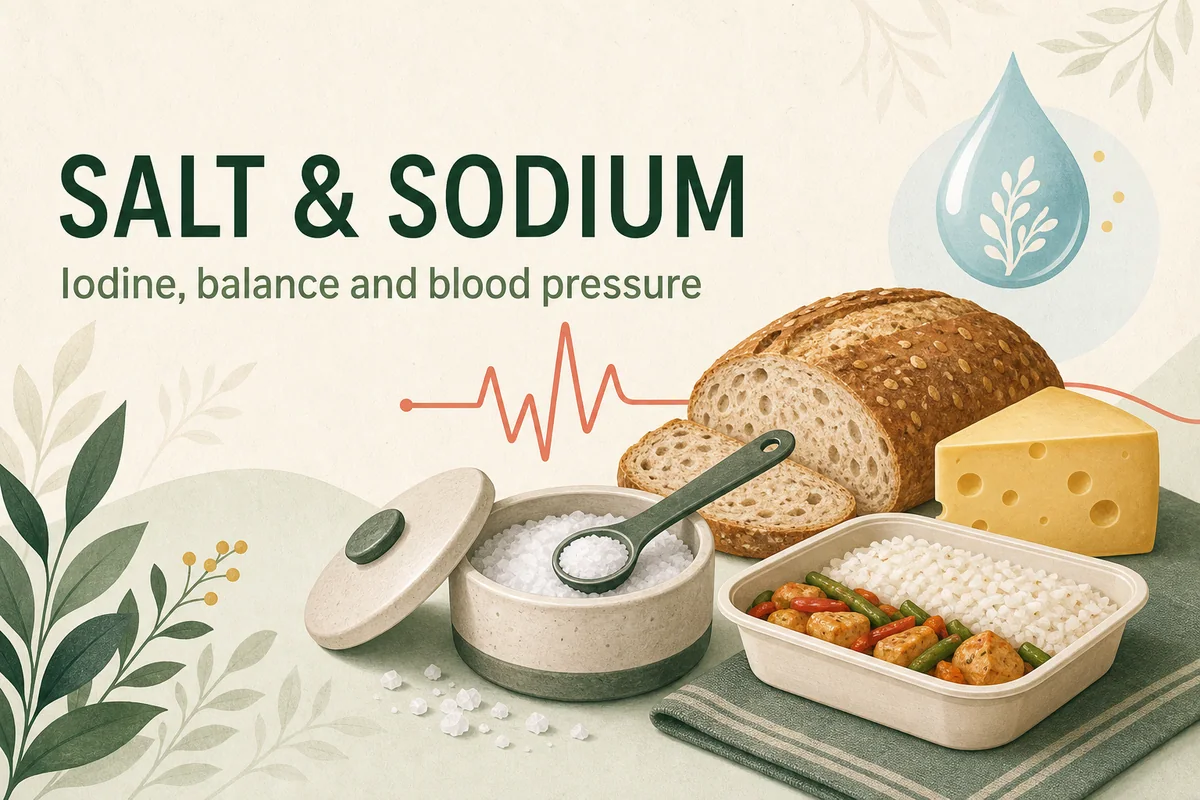
Sodium is essential for fluid balance, nerves and muscles, but it is easy to get too much from bread, cheese, processed meat, sauces and ready-made food — without ever touching the salt shaker.
The role of salt
The key component of salt is sodium.
Table salt is mainly sodium chloride. Sodium is an electrolyte that helps maintain fluid volume, transmit nerve impulses and contract muscles. Chloride also contributes to fluid and acid-base balance.
Fluid balance
The kidneys and hormones regulate how much sodium and water the body retains or removes.
Nerves and muscles
Differences in sodium concentration help nerve cells send signals and muscles contract.
Blood pressure
A high sodium intake raises blood pressure in many people. Sensitivity differs, but population limits apply broadly.
The app's actual logic
Salt is an important exception to the weight formula.
Protein, fat and carbohydrate zones in the app depend on weight and the energy goal. The base salt limit does not: DailyBalance uses the WHO guide of up to 5 g per day.
Salt and sodium are not the same number
Sodium (g) × 2.5 ≈ salt (g)Salt (g) ÷ 2.5 ≈ sodium (g)
2 g sodium × 2.5 = 5 g salt
If a label gives sodium, it can be converted to salt. European nutrition declarations usually already show “salt”.
The app minimum is 0 g because it does not set a lowest target to chase. Five grams is an upper guide, not a goal. An enabled weekend calorie offset can proportionally change the limit displayed for a particular day.
Salt quality
Colour and price matter less than iodine and total amount.
Sea, rock, pink or gourmet salt is still mainly sodium chloride. Trace minerals are generally consumed in amounts too small to make salt an important source.
Iodised salt
If you use salt at home, an iodised version can help provide iodine. Iodine is required for thyroid hormones and is particularly important for fetal and early-childhood brain development.
Non-iodised “premium” salt
Himalayan, fleur de sel and many sea salts are not inherently healthier. Check the label: many are not iodised.
Potassium salt substitutes
They can lower sodium but are not suitable for everyone. With kidney disease or certain blood-pressure medicines, too much potassium can be dangerous.
Too much and too little
High blood pressure is common; true low sodium is a different kind of problem.
Persistently too much salt
High sodium intake raises blood pressure, and high blood pressure increases the risk of coronary heart disease and stroke. Sodium also promotes fluid retention and can worsen swelling and the management of heart or kidney disease. Much of it comes from frequently eaten processed foods rather than salt added at the table.
Low blood sodium
Hyponatraemia means a low sodium concentration in blood, but it is usually not caused simply by avoiding added salt. More common causes include excess water, vomiting, diarrhoea, heavy sweating, diuretics, and kidney, heart or liver disease. Symptoms include nausea, headache, weakness and confusion; severe cases can cause seizures, coma or death.
EFSA describes 2 g sodium per day as safe and adequate for adults, while WHO recommends staying below 2 g sodium (5 g salt). This is not a reason to deliberately eat 5 g salt: ordinary foods already contain sodium.
Everyday practice
The biggest gains come from food choices, not the shaker.
- ✓Compare labels.
Salt in bread, cheese, sauces, ready meals and processed meats can vary substantially between brands. - ✓Build flavour differently.
Use herbs, spices, garlic, citrus and vinegar, and reduce salt gradually. - ✓Count all sources.
The daily total includes added salt and sodium already present in prepared foods and condiments. - ✓If you use salt, choose iodised.
Iodised does not mean unlimited; the 5 g limit still applies.
Sources and note
Less salt can mean more healthy years.
This article provides general education. DailyBalance is not a medical device, and its limit does not replace an individual instruction from a clinician.
- WHO — Reducing sodium intake to reduce blood pressure and cardiovascular risk
- EFSA — Dietary reference values for sodium
- MedlinePlus — Low blood sodium (hyponatraemia)
- WHO — Iodine status and iodine deficiency
Reviewed 23 August 2026. Limit checked against the default calculation logic in this version of `app.html`.